What is a Welding Robot and How Does it Work?
Welding Robots are transforming the manufacturing landscape. Dr. Emily Carter, a leading expert in robotics, states, “Welding Robots enhance precision and efficiency.” These machines automate welding tasks, making production faster and safer. They reduce human error while improving weld quality and repeatability.
However, there are challenges in integrating Welding Robots into existing workflows. Companies may face high initial costs and require specialized training. Furthermore, it's critical to ensure that these robots work in harmony with human employees. Balancing automation and human roles can be tricky but is essential for a successful transition.
Understanding how Welding Robots function is key to leveraging their full potential. They utilize advanced sensors and programming to perform complex tasks. As the industry continues to evolve, staying informed about these developments is more crucial than ever. The future of welding lies in embracing automation while considering its impact on the workforce.
Definition and Overview of Welding Robots in Modern Manufacturing
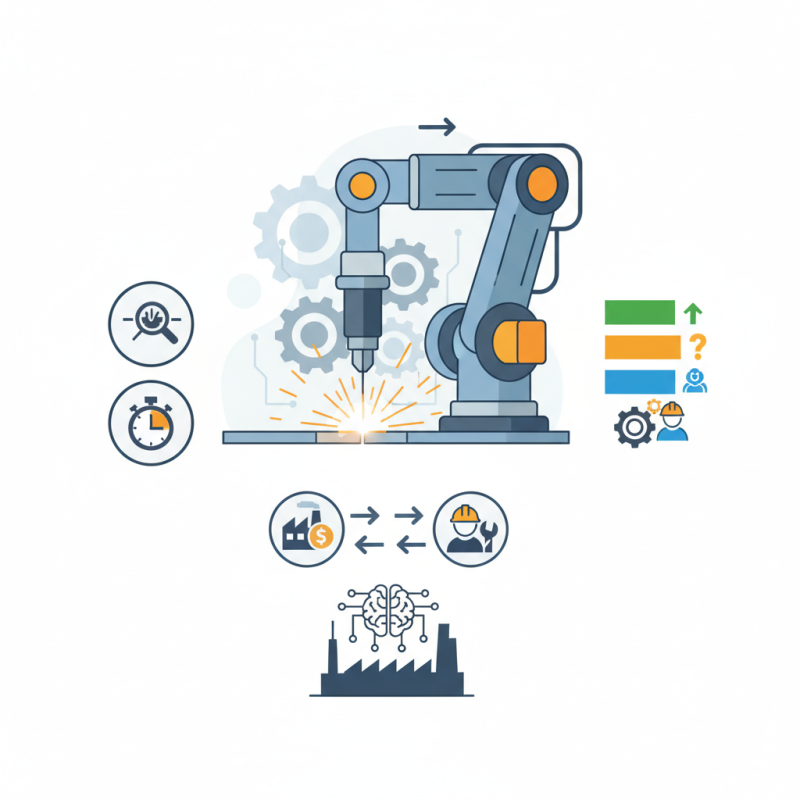
Welding robots play a crucial role in modern manufacturing. These automated machines specialize in joining materials using heat and pressure. They are designed for precision and efficiency. In many factories, they have replaced traditional manual welding processes. This shift allows for higher production rates and consistent quality.
The structure of a welding robot typically includes a robotic arm equipped with a welding tool. These robots can operate in various environments, from automotive production lines to heavy machinery fabrication. Operators program them to perform complex welding tasks. However, programming can be tricky, requiring skilled technicians. Misalignment in settings may lead to defects, challenging quality control.
Despite their efficiency, welding robots are not flawless. They may struggle with intricate designs that humans can easily navigate. Continuous technical training is essential for operators to optimize operations. This constant learning ensures the equipment remains reliable and effective in meeting production demands. Embracing these technologies enhances not just output but also overall safety in welding operations.
The Core Components of a Welding Robot System and Their Functions
A welding robot is an automated machine that performs welding tasks, vastly improving precision and efficiency in manufacturing. The core components of a welding robot system drive its superior performance. These components include the robotic arm, controller, and end effector.
The robotic arm is the heart of the system. Its joints enable it to move in multiple degrees of freedom. This flexibility allows precise movements and access to intricate weld areas. According to a report from the International Federation of Robotics, the global demand for industrial robots has surged, with a projected growth of 25% through 2025. This statistic highlights the increasing reliance on automation, particularly in welding.
The controller manages the robot's operations. It interprets programmed instructions and regulates movements. With advancements in software, modern controllers enhance synchronization and reduce errors. The end effector, often a welding gun, executes the actual welding. It's crucial that the end effector is designed for compatibility with specific welding techniques, such as MIG or TIG.
**Tips:** Regular maintenance of the robotic system extends its lifespan significantly. Ensure you periodically check the wiring and joints for wear and tear. Training operators on programming can boost productivity and decrease error rates. Embrace a continuous improvement mindset to address inefficiencies in current welding operations.
Understanding the Welding Process: Types and Techniques Used by Robots
Welding robots have transformed industrial processes, improving efficiency and precision. Understanding the types and techniques they use reveals their capabilities. Common welding methods employed by robots include arc welding, laser welding, and spot welding. Each technique has its unique advantages and applications, depending on the materials involved and the required final product.
Arc welding, for instance, utilizes a high-temperature electric arc to melt the metal at the joint. This technique is highly effective for thicker materials, making it a popular choice in manufacturing. Laser welding, on the other hand, offers great precision. It uses concentrated laser beams to create strong bonds with minimal heat-affected zones. This is crucial in industries where material integrity is vital. Spot welding, typically used in sheet metal work, quickly joins two metal parts at specific points. It is fast and efficient but may lack the strength of other methods.
Despite these advancements, challenges persist. Some robots struggle with complex geometries and varying material thicknesses. This limitation can lead to inconsistent weld quality. Regular maintenance and programming updates are essential to ensure optimal performance. Even with automated systems, human oversight remains critical for quality assurance. Understanding these nuances can enhance the effectiveness of robotic welding in diverse applications.
What is a Welding Robot and How Does it Work? - Understanding the Welding Process: Types and Techniques Used by Robots
| Welding Technique | Description | Applications | Advantages |
| MIG Welding | Metal Inert Gas welding uses a continuous wire feed to create a weld. | Automotive, construction, and fabrication industries. | Fast, versatile, and easy to learn. |
| TIG Welding | Tungsten Inert Gas welding uses a non-consumable tungsten electrode and inert gas. | Aerospace, pipe welding, and high-end fabrication. | Produces high-quality, precise welds. |
| Stick Welding | Shielded Metal Arc Welding uses a consumable electrode coated in flux. | Construction, repair work, and maintenance applications. | Effective for outdoor work and thicker materials. |
| Laser Welding | Utilizes a high-energy laser beam to melt and join materials. | Medical devices, electronics, and high-precision applications. | Highly precise and can weld thin materials effectively. |
| Plasma Arc Welding | An arc is generated between a tungsten electrode and the workpiece. | Aerospace, automotive, and shipbuilding industries. | Produces deep penetration and good control. |
Industry Applications of Welding Robots: Benefits and Productivity Stats
Welding robots have become essential in manufacturing. Their applications span various industries, from automotive to aerospace. According to a recent industry report, the adoption of welding robots can increase productivity by up to 50%. This dramatic boost arises from their precision and consistency, enabling businesses to meet tight production deadlines.
Data indicates that welding robots can operate continuously, unimpeded by fatigue. This efficiency leads to significant cost savings. Moreover, companies have reported a reduction in material waste by approximately 30% when using robotic welders. This not only benefits the bottom line but also supports more sustainable practices in manufacturing.
Tips for incorporating welding robots include investing in employee training. Skilled operators can better manage these machines. Regular maintenance is also crucial. Scheduling downtime for upkeep can prevent costly interruptions. Though businesses may face initial challenges implementing these systems, the long-term benefits can outweigh early struggles.
Future Trends in Welding Robotics: Automation and Technological Advancements
The field of welding robotics is rapidly evolving. Automation is now at the forefront, bringing numerous benefits. Welding robots can execute tasks with precision and speed that surpass human ability. They reduce the likelihood of errors, ensuring quality in every seam. This accuracy not only enhances productivity but also minimizes material waste.
Technological advancements are redefining capabilities in this arena. Enhanced sensors and AI integration allow for real-time adjustments. These improvements lead to smarter robots that can adapt to different materials and environments. However, this integration raises questions about job displacements. Workers may need retraining to adapt to these advanced technologies.
Despite these innovations, challenges remain. Not all welding tasks can be fully automated. Complex designs and intricate welds often require human skills. Companies must carefully assess when to integrate robots. Finding the balance between human expertise and robotic efficiency is crucial. As the industry progresses, ongoing evaluation will be vital to ensure optimal results in welding projects.
Welding Robot Adoption Over Time